Round point VS hollow point bullets

Guys,

I do see some utter crap on some threads here. This thread has both extremes. Try visiting stoppingpower.org which is the website of Evan P Marshall, a retired police officer who collates the stats from all police shootings in the US (Thats quite a few) and has been doing so for years. The level of detail is astounding when you dig into it. He records information about the type of ammo used, ranges, weapon variant used, elevation, terminal ballistics the list goes on. Membership on his forum is free.

He also publishes some very fine books.

Stay Safe

Dave T
 
A hollow point by design will do greater damage than a FMJ. HP is also more unreliable than a FMJ. Most modern firearms should have at least the feeding ramp polished if not ported to chamber a hollow point reliably.

Keep in mind LE agencies have to take into account results of civilians/innocents getting hit by accident - this is another reason from FMJ's.

FMJ is produced locally and cheaper than the high to mid-range HPoints.

It is for these reasons that the vast majority of law enforcement agencies across the globe select FMJ over hollow point.

Over penetration is not a real issue with FMJ's. Unless they have an extra hot load and and shot from very close proximity, even if they exit the target and hit someone else, the velocity will have dropped so much that a deadly consequence is unlikely.

m
MTS, i only know of one incident in NI. An off duty Police officer walked in on a robbery. The robber ran off, cop shouted a warning. Robber turned and pointed a firearm at the cop. Cop fired, no reaction. Robber continued to run and turned a further two times pointing firearm. Cop fired a further two times the last time hitting him in the arm spinning him round. Cop believed he had missed twice(i know him and story direct from him), he had not. The first two rounds had struck him in the torso passing through him cleanly. One of the rounds struck a brick wall and broke up sending pieces of the round in different directions, removing the ear lobe of a young(8 or 9) year old girl standing nearby. This was a .38(Ruger speed six Pish) using +pp rounds which were issued.
My opinion is that HP/silver tip etc are a health and safety device. We use 9mm which isnt a great stopper. I Police on my own and if i hit the culprit i want him to go down and i dont want someone on the other side to be in danger. We all know that in these situations your vision closes down and all your really looking at is the gun or person so consideration for innocents on the other side is a real issue. How many times have you seen footage normally from the US(not slagging cops in the US) of cops converging on a vehicle and rounds passing through vehicles windows towards each other.
I believe ACPO have a working group on this very subject.
M
 
There are many variables. A shot that a person may think is COM, or should be a high value COM shot, may not be. Here is something I wrote a few years ago:

----------------------------------------------------------------------------
After various threads along the lines of "This guy was hit x times with y ammo of z calibre and he still didn’t die" I have decided to tell you all what my perspective is on gunshot wounds and shot placement. To begin with let’s go over what we are told by all the experts as regards neutralising a threat by means of gunfire:

1) It is accepted that there are certain ’critical’ organs and structures within the human body which, if significantly damaged, will lead to the neutralisation of that individual’s ability to pose a threat.

2) It is also accepted that if we intend to damage those structures we must deliver a projectile that has the ability to penetrate deeply enough into the target to reach and damage those critical organs and structures.

3) Lastly we must have some exterior landmark to aim at, which will correspond to the position of the critical organ that we are aiming to damage.

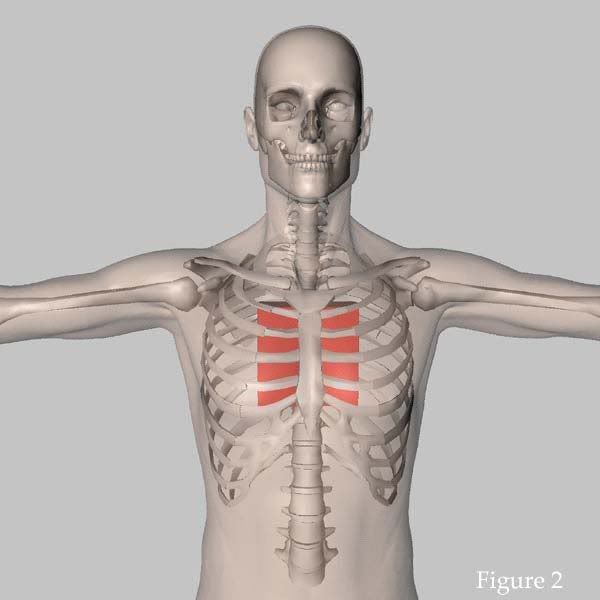
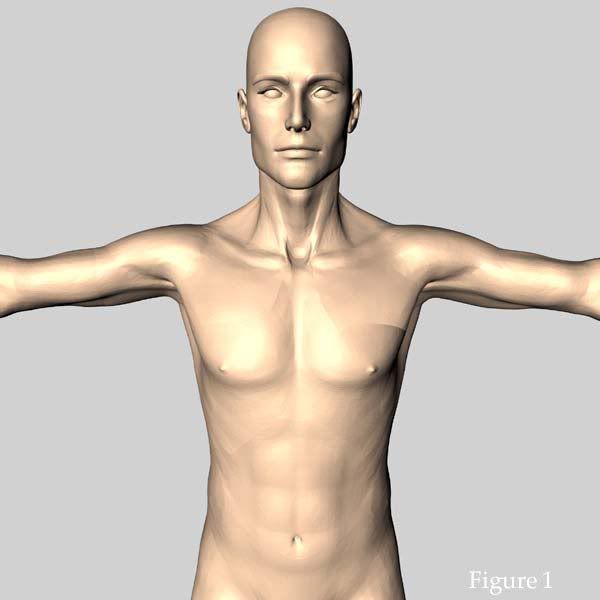
And these three points are very difficult to satisfy in real-world shootings because of the variables involved. To illustrate this, let us pretend that every bad guy we ever encounter will always stand with his arms out sideways (as in Figure 1) and that there is a critical rectangular plate of known dimensions within his chest (as in Figure 2, 3 and 4). Let us also pretend that any bullet that can pass through that plate so that it damages any two parallel surfaces of the plate, will result in an instant incapacitation of that man.


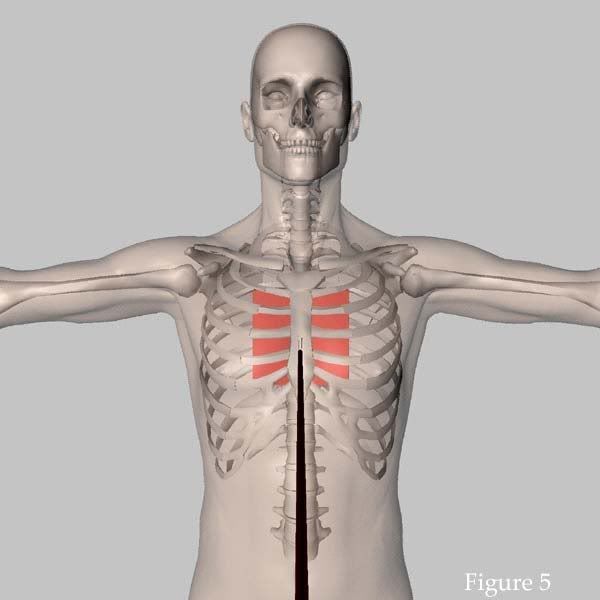
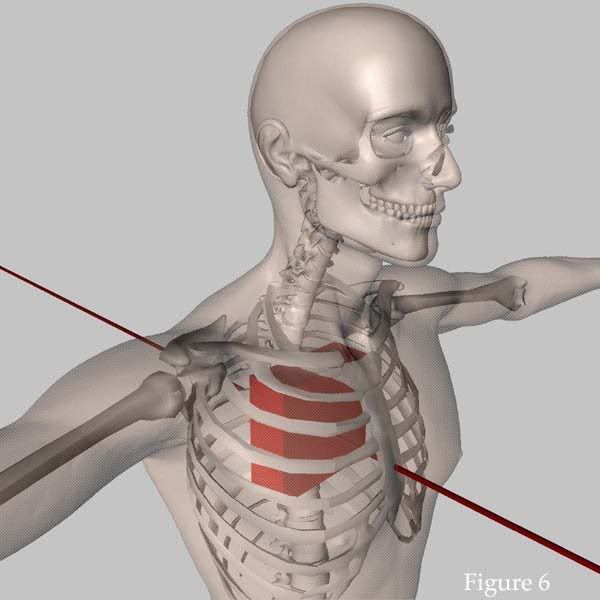
If that is the case, then an ideal shot will be in the center of the chest, through the sternum and through the plate, as indicated by the red line trajectories in Figure 5 and 6:


Of course, we cannot aim directly at that plate at the time of the shooting because we do not have X-ray vision, so we choose an overlying surface landmark instead. If we retain the red trajectory in Figure 6 but this time only mark where it enters the skin, we can make a blue aiming point on the man’s chest as in Figure 7:


This blue circle seems to be the ideal aiming point if we want to hit that critical red area within the chest. Okay, so let’s assume for now that everybody here can satisfy the following requirements:

1) Hit that blue circle ALL the time, 100% accuracy.

2) Deliver a projectile that cannot be deflected, fragmented or otherwise impeded by the target’s tissues. In other words, this will be a projectile that travels in a straight line like a laser beam, no matter what it hits.

3) The projectile has sufficient energy to penetrate the man’s chest and perforate the critical red area.

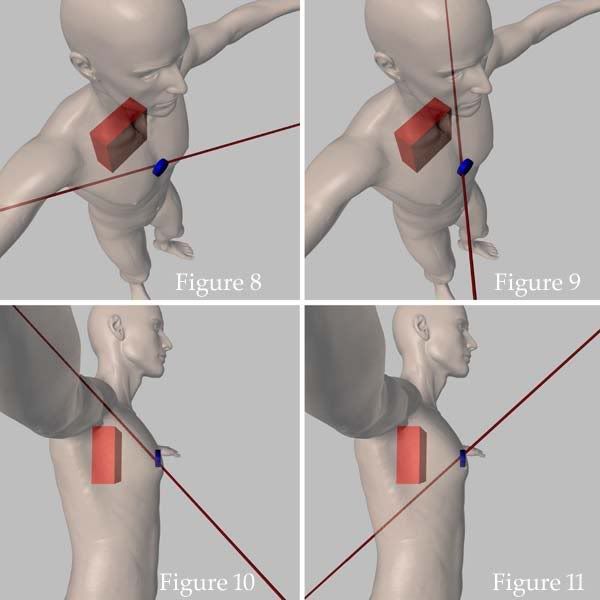
Even if the above points could be satisfied, we would still have variables to do with the position of the shooter relative to the position of the target. There are numerous combinations of these positions whereby even if the above three points are satisfied, the projectile fails to even touch the red critical area. Examples can be seen in Figures 8 to 11:


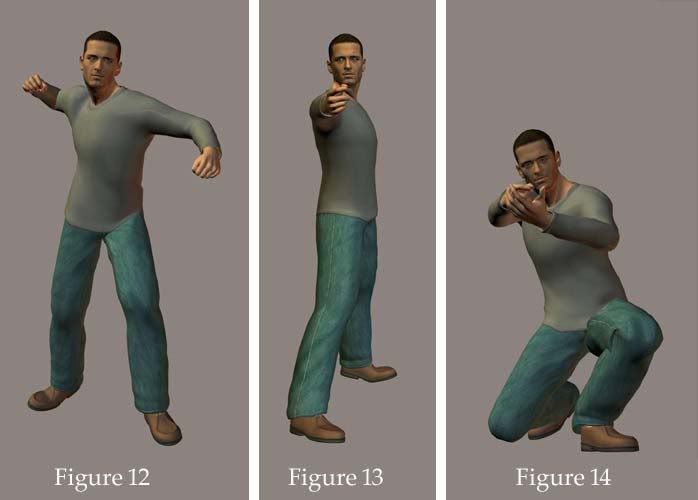
Note that in the above trajectories the blue circle has been hit but not the red area within the chest. Now we must add another variable: the fact that the bad guy doesn’t want to stand there with his arms out sideways showing you his chest so you can pick a spot to hit. Have a look at these poses and try to imagine where that blue circle is in all of them. In those cases where you automatically dismiss the blue circle as a valid aiming point, try to work out where you would aim to hit the red area within the target:

This image has been resized. Click this bar to view the full image. The original image is sized %1%2.
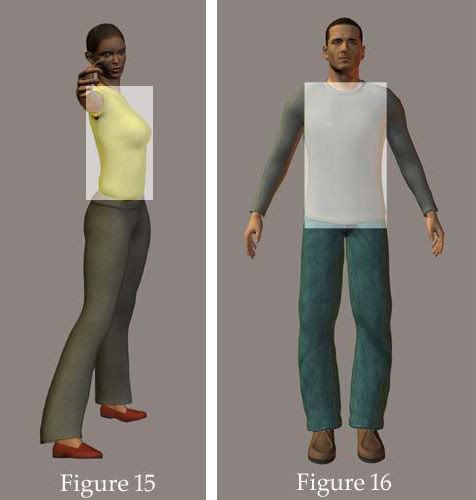
This is why we get told to aim for center of mass (COM). The reason being that we are likely to hit something of some ’value’ even if we don’t hit the ’magic red area.’ So therefore in the following figures, the COM would be where I have shaded them:


Note the problem of the target’s profile and build. A fat guy or a big-busted woman when standing sideways may appear to be offering quite a large COM, but in reality the critical area available to be struck is less than would be available if they stood facing the shooter. This is how you get COM hits that ’go right through the target’ but do not have the required effect, and that’s when we get blame put on the weapon/calibre/ammunition type. You only have to spend some time in the emergency room of a large trauma center to see perforating gunshot injuries that have failed to kill or even seriously injure the victim.

Note also that so far we have not even touched on the subject of projectile deflection or fragmentation within the clothing or tissues of the target. A projectile that may have been traveling straight towards the critical area as in Figure 7, may not reach the critical area if it is deflected by the sternum or an anterior rib end. Another thing to remember is that there is no such thing as a nice geometric ’red critical area’ as I have drawn here. That was just a convenient way for me to demonstrate the trajectory variables involved. There are substantial variables in the size and position of vital structures such as the heart and great vessels within a person’s chest. Further surface variables exist such as muscle content, fat, clothes, bone mineralisation etc. This means that you cannot guarantee that a bad guy will go down even if you are fortunate or skilled enough to place that shot exactly where you intend it to go. Even head shots are not a guarantee to instantly incapacitate somebody.

Note there is a mistake in the shading of the last image: it should not include the pelvis. In fact there are some who say that the modern COM should include thorax only, no abdomen.
 
Another person who obviously knows his onions. Thanks for this post its the most comprehensive i have seen and just goes to show the calibre of persons on this site. I hunt deer regularly so have to think about shot placement regularly and so your diagrams really strike home.(pardon the pun) However would it not be fair to say that a correctly placed shot with an HP or similar is more likely to stop the assailant? Indeed an incorrectly placed shot with similar round is also more likely to stop him/her? I am also, perhaps incorrectly of the opinion that these rounds are more likely not to exit and so less likely to injure an innocent person. These points are in my opinion the crux of the argument.
Odd, once again thanks for the post.
M
 
SXT = Stopping Power

After a number of police shootings where officers where killed, Australian Police Forces adopted hollow point ammunition. In the late 70’s to early 80’s coronial inquests in a number of states found that armed offenders who where shot by police using service “FMJ†ammunition (usually .38) still managed to engage the police. HP ammunition was then examined and recommended for it's “stopping†power, with reduction of perforation being favourable (but a very low priority in the selection process). Around this time NSW Police adopted hollow point .38 ammunition after a shooting incident near Bathust where an offender was shot a with FMJ rounds prior to shooting dead a police officer. The offender in that instance had been shot a number of times including rounds to the centre of body yet still continued. Currently the service uses .40 SW SXT and to good result; strong stopping ability with reduced lethality. It seemed like we where slow on the uptake as the U.S. had adopted this change years before us. A little suprsised to still hear some services not using HP ammunition in hand guns.

As for military rifle ammunition, I thought the solid ball round was replaced by the SS109 for NATO and allied forces in the late 80’s? The SS109 appears similar to traditional ball ammunition, yet it fragments.
 
There is a school of thought that say the pelvis should be included as part of centre of mass. Major large arteries are in the region and a smashed pelvis reduces the subjects ability to move, allowing follow up shots to be better placed.
 
The issue is that there are precious few points on the pelvis that you can fracture with a handgun bullet so that the individual is disabled (cannot move towards you). Furthermore the arteries are a relatively small target. So I don't subscribe to that school of thought.

I agree with Dr Roberts' comment on the matter here:

Shots to the Pelvis - M4Carbine.net Forums

And...even if the guy does go down, it doesn't mean he is incapacitated. From another thread on the same forum:

Again, I “get†shooting the pelvis in the weird case where it is the best available target, but I do not see a benefit to having a gunfight with a standing suspect, and then having another one with the same guy who is now grounded-and that is the “best†case.

Failure to Stop, Head or Pelvic Shot, whats a guy/gal to do? - Page 4 - M4Carbine.net Forums
 
But if he does go down , you have the options of moving away completely, moving to cover, or tactically moving closer for follow up shots. I'd shoot centre mass, but wouldn't just right off the pelvic region. It might be the best option if the target is wearing body armour, as the head is generally the hardest area to hit, as it's one of the first part to move from centre line.

And let's be fair, a shot to slightly left of centre chest can pass through lungs etc. and also not be immediately incapacitating.
 
There is a school of thought that say the pelvis should be included as part of centre of mass. Major large arteries are in the region and a smashed pelvis reduces the subjects ability to move, allowing follow up shots to be better placed.
Rapier, i seem to remember it mentioned that shots to CNS and pelvis will always drop a subject.
M
 
The issue is that there are precious few points on the pelvis that you can fracture with a handgun bullet so that the individual is disabled (cannot move towards you). Furthermore the arteries are a relatively small target. So I don't subscribe to that school of thought.

I agree with Dr Roberts' comment on the matter here:

Shots to the Pelvis - M4Carbine.net Forums

And...even if the guy does go down, it doesn't mean he is incapacitated. From another thread on the same forum:


Failure to Stop, Head or Pelvic Shot, whats a guy/gal to do? - Page 4 - M4Carbine.net Forums
And thats what you get for not reading all the posts before replying.
M
 
But if he does go down , you have the options of moving away completely, moving to cover, or tactically moving closer for follow up shots. I'd shoot centre mass, but wouldn't just right off the pelvic region. It might be the best option if the target is wearing body armour, as the head is generally the hardest area to hit, as it's one of the first part to move from centre line.
And let's be fair, a shot to slightly left of centre chest can pass through lungs etc. and also not be immediately incapacitating.

The thing that I want to get across is that the pelvis (although appearing to be a substantial target externally) has very few areas that you can hit in order to 'bring someone down.' You would have to hit an acetabulum or upper femur, because you are relying on taking support out from one side.

Handguns cause localised damage to the pelvis, you can't just shatter it. Rounds frequently pass through the iliac blades and sacrum with no more than a neat hole in bone. It is the same with other flat bones like the scapula. At least with the chest you have a more 'target rich' area in terms of vascular structures. You might get lucky and hit the spine but that's not what you can aim for. Same with the pelvis, you might get lucky and hit a hip joint, but that's not what you can aim for.
 
Shoot to stop.

There is a school of thought that say the pelvis should be included as part of centre of mass. Major large arteries are in the region and a smashed pelvis reduces the subjects ability to move, allowing follow up shots to be better placed.

Totally agree with that statement. A major change in general police shooting practices was “proximity shootingâ€. Rounds on target quickly; fired in quick succession with spread over an increased advised target area (spread of trauma). That advised area to include the whole torso (area between shoulder to the top of the thigh). For year’s police shooting involved deliberate practices focussed on accuracy and small grouping instead of rounds on target at speed. Remembering most police shooting incidents occur quickly within less than 8 meters distance between the officer and the offender. Tactical policing practices and training differs from general policing training, but it’s important to remember that most police only are required to do a range requal once or twice a year. Back to the original post; jacketed rounds to hollow point rounds like SXT; and the transition from revolver to semi auto pistols, and shooting styles trends from deliberate (well aimed) to proximity shooting have evolved to better the chances of officer survival. Police shoot to stop; not shoot to kill.
 
Totally agree with that statement. A major change in general police shooting practices was “proximity shooting”. Rounds on target quickly; fired in quick succession with spread over an increased advised target area (spread of trauma). That advised area to include the whole torso (area between shoulder to the top of the thigh). For year’s police shooting involved deliberate practices focussed on accuracy and small grouping instead of rounds on target at speed. Remembering most police shooting incidents occur quickly within less than 8 meters distance between the officer and the offender. Tactical policing practices and training differs from general policing training, but it’s important to remember that most police only are required to do a range requal once or twice a year. Back to the original post; jacketed rounds to hollow point rounds like SXT; and the transition from revolver to semi auto pistols, and shooting styles trends from deliberate (well aimed) to proximity shooting have evolved to better the chances of officer survival. Police shoot to stop; not shoot to kill.

That makes sense...But still...

I am sure the future generation of infractors or armed infractors will send thanks to the guy who implemented the idea...

The problem is that as a Police Officer you are in the pickle the moment you draw the weapon (Assuming you survive).

You will have the "Honest to God cittizens" ,Human rights wackos ..you name it ...all of them screaming that you infringed the guy`s rights...
Not to mention the infractor`s lawyers that will have a field day...

So why not ..You know...avoid all this...Makes more sense to focuss on accuracy and small grouping....

But then again i guess this will be down to every officer ..In the heat of fight you can not expect a guy to start thinking about proximity shooting..

Nevermind...That`s an interesting shooting style trend..
 
Your kidding Gorilla!

Jim Cirillo (ex NYPD) is one of the men that devised and promoted the concept. Google him; interesting man who gave sound advice on officer safety and survival.


Legal - No case to answer when use of force is deemed appropriate and proportionate in police self defence or the defence of others. Also note that some jurisdictions also have a lethal force option to stop a fleeing felon that otherwise may escape.


I agree accuracy is important. But given the environment and stress; small grouping requires the luxury of time that officers do not have in a contact. Let’s thinks about this. What would be harder to remember in the heat of a gun fight or violent attack; the marksmanship principles associated with small groups? Or proximity shooting where the basic principles are point and shoot with both eyes open looking along the top of the receiver over the sites at the threat? If required the offender can be engaged as soon as the pistol clears the holster.


It’s not about remembering anything…. It’s a drill. Rounds on target as quickly as possible spread over the advised target area.


Come to think of it; never seen too many people who are in vocal support of offenders who assault/attack police.


Thanks for high lighting the typo miss.
 
Last edited:
And let's be realistic here, there isn't a handgun round that is GUARANTEED to stop an attacker with one round, no matter where hit. In a firefight any hit is a good hit.

While the pelvis may not technically be an incapacitating hit, let's not ignore the pain factor and shock caused, that may not 'stop' the attacker but will sure make his eyes water and lessen their combat effectiveness. And the round may deflect (as already mentioned) though a femoral artery or up into the chest area. Even if it were to pass through, a large chunk of the gluteus maximus may well go with it and that would slow the attacker down too.

Yes, shoot for centre mass, but don't be scared of pulling the trigger as soon as on target and traversing their body as you get to the centre mass. And keep firing until the threat is negated.
 
Guys,

A couple of points.

Firstly, the anecdotal story of the off duty RUC/PSNI bod walking in on a robbery was a little thin on detail. The Blacks use a 357 Mag 158 grain JSP (Soft point not hollow point) or did the last time I was on the range with them. The weapon used to be a Ruger speed six. This brings us to the very fine line between JSP/JHP and heavy enough versus too heavy.

Back in the day the only weights of 357/38 projectiles were 125 and 158. The 125 grain load in JHP configuration at standard magnum pressures was the most reliable one shot stopper (of any calibre) on the market for some years, at about 95/96% of single shot stops. 158 was always too heavy but had been a favourite of .38 special shooters for years. When 158s were cranked up to magnum velocities they overpenetrated a lot of the time and an intermediate weight was brought in (140 grain).

The reason the RUC went with 158 was because of its extra punch when fired through soft skinned vehicles/windscreens.

The second area which I would warn many of us against is the 'range mentality' which a lot of people get carried away with. We read so much about double taps and the like that we think such firing patterns are the guarantee for dropping the target. Keep firing until the guy is down and out. Firing a quick pair and then coming off aim to check if he has fallen is a poor drill. It'll get you killed, your oppo killed or a civvy killed.

Stay safe

Dave T
 
Back
Top